
Giving me back my voice
She was the singer in a smokey room
Hannah’s name has been changed to protect her identity.
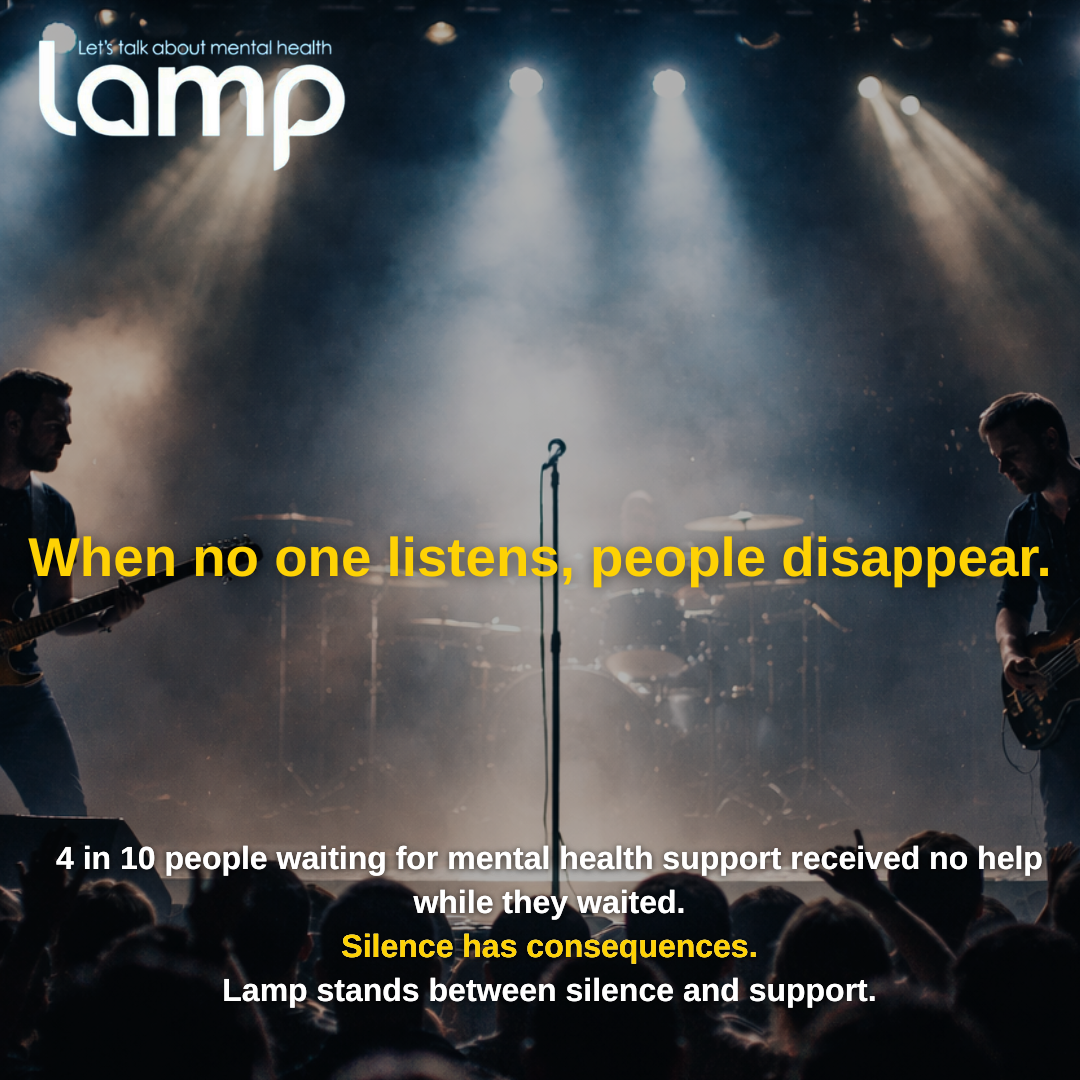
There was a time when Hannah stood at the front of a band, holding a microphone and filling a room with sound. Singing was not simply something she enjoyed; it was how she connected with other people and how she understood herself. Music gave her structure, purpose and identity. When she sang, she felt visible and confident in who she was.
By the time Lamp first met her, that part of her life felt very far away.
Hannah had fled a violent relationship and was living with the ongoing impact of trauma. Alongside this, she was managing a complex physical health condition that made speaking painful and physically exhausting. Over time, isolation had tightened around her, when we visited her at home, she had not left the house in two weeks and had barely eaten for several days. Communication required so much energy that she avoided it wherever possible, and the effort of explaining her situation left her completely drained.
At our first meeting she did not speak. Instead, she handed over pages of handwritten notes in order to tell us what had happened and what she needed. Writing everything down was physically demanding, but it felt safer than forcing her voice. Those pages were not only a description of her circumstances; they were evidence of how hard she was working simply to be heard.
When people think about an empty seat, they often picture a theatre or a concert hall, a place where someone should be but is not. In Hannah’s life, the empty seat represented something quieter but just as significant. It symbolised the space she once occupied in the world, the identity that had slowly receded as trauma, ill health and practical barriers combined to keep her inside her home, the woman who once stood on a stage now struggled to cross her own front door.
Lamp’s involvement did not begin with dramatic solutions, it began with stabilising the basics that had slipped away. We ensured she had access to food and supported urgent safeguarding measures so that she was safe in her home. We worked with other services to secure essential equipment and establish a care package that addressed both her mental and physical needs. We supported her to attend appointments that felt overwhelming and introduced communication technology that reduced the physical strain of speaking, allowing her to express herself without causing further harm to her body.
The changes were steady rather than sudden. Hannah remains largely confined to her home and continues to face significant barriers to independence. However, the foundations beneath her have shifted, she is eating more regularly and engaging with services more confidently. She no longer feels entirely alone in navigating complex systems, the presence of consistent advocacy has allowed her to rebuild trust gradually and at her own pace.
Recently, in a quiet conversation, she shared something that might seem small to someone else but carried deep meaning for her.
She has started singing again.
She is not performing to an audience or standing under stage lights. She sings to her bird in her living room, it is a private and gentle act, yet it represents the return of a part of herself that trauma had almost silenced.
The Empty Seat campaign is about the people who fade from view when systems are fragmented and when stigma or complexity makes them harder to support, it recognises that absence is not always obvious. Sometimes it is the absence of confidence, connection or a voice in rooms where decisions are made.
In Hannah’s case, the seat was not permanently empty. With the right support at the right time, she has begun to step back towards herself. The stage looks different now, and the audience is small, but her voice is present again.
It is being heard.
If you need mental health advocacy support, please contact Lamp on advice@lampdirect.org.uk or call 0116 255 6286.
If you would like to help ensure fewer seats are left empty, you can support The Empty Seat campaign here: https://www.justgiving.com/campaign/theemptyseat